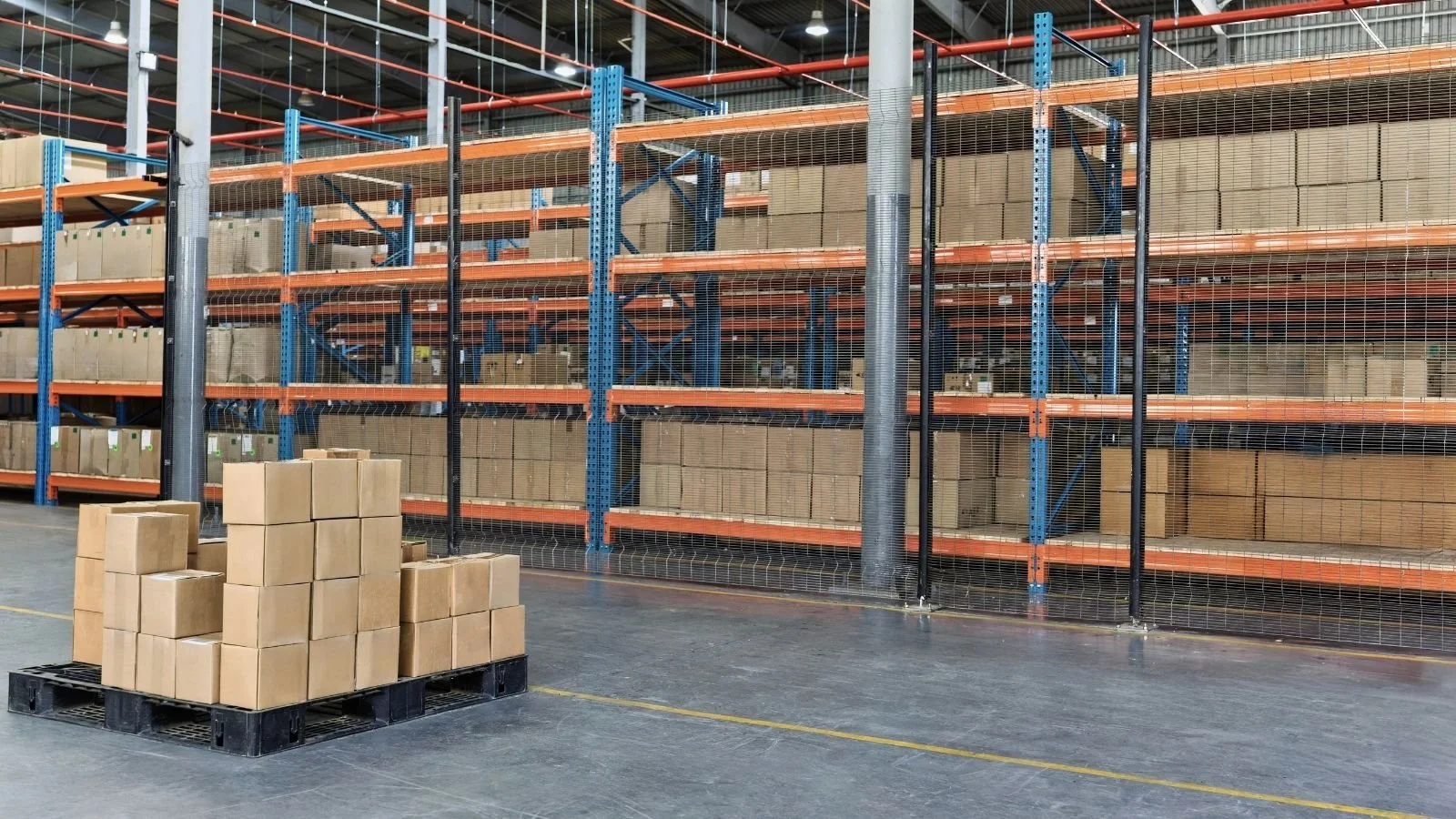
Goods in a private customs warehouse, held with import duty and VAT on hold until they are sold or exported.
Key takeaway
To set up a bonded warehouse in the UK, your business applies to HMRC for a customs warehouse authorisation for its own premises. You need to be UK established with an EORI number, show a business need, run a stock system that tracks the customs status of every item, and usually provide a guarantee unless you hold AEO status. HMRC asks for the application at least two months before you want to start. With the groundwork done first, approval typically takes around three months.
A bonded warehouse, which HMRC calls a customs warehouse, lets you store imported goods with import duty and import VAT on hold. You pay when goods are released for sale in the UK, and nothing at all on goods you export. Without one, every container pays duty at the port, including stock that sits for months or leaves the UK again. Holding stock under customs control is standard practice for UK importers, from homeware and fashion brands to timber merchants and machinery dealers.
Setting up your own means getting a HMRC authorisation for your site. The application itself is an online form, however the preparation and work prior to this is essential in ensuring the site, the stock system and the written procedures HMRC will test are compliant with requirements. This guide covers each stage in the order we work through it with clients, and the points where applications usually stall.
1. Do you need your own bonded warehouse, or space in someone else's?
There are two types of customs warehouse, and they suit different businesses.
Your own goods, at your own site, under your own authorisation
- No storage or handling fees to a third party
- Stock stays where you already pick, pack and dispatch it
- You decide when goods are released, and when duty is paid
- Your own records, so your duty position never depends on someone else's stock count
An operator stores goods for many customers under its authorisation
- Storage and handling fees on every pallet, for as long as it stays
- Goods sit away from your own site, adding transport and lead time
- Releases work to the operator's timetable
- You rely on the operator's records standing up to HMRC
A public bonded warehouse can suit a business that imports occasionally or has no premises of its own. For businesses that import regularly and already have a warehouse, unit or yard, a private bonded warehouse usually costs less over time and keeps both the stock and the compliance under your control. That is the route this guide covers, and the one Readyset sets up for clients. The client in section 5 moved to their own after the third party warehouse they relied on failed an HMRC stock check.
The businesses we see doing this include homeware, fashion and toy importers, ecommerce brands selling into Europe, timber, flooring and tile merchants, access platform and spare parts dealers, and steel stockholders. Since July 2026, steel above the quarterly quota pays a 50% tariff, and holding it under customs control lets you release it when the next quota opens. Anti dumping duty stays on hold in a customs warehouse too. New to the idea? Start with what a customs warehouse is and how it works.
2. Bonded warehouse requirements: can your business apply?
HMRC will only approve a customs warehouse if your business meets its conditions. Check that you:
Are established in the UK and have a GB EORI number
Are financially solvent, with a good record of customs compliance
Have a genuine business need, usually stock held before sale or goods that are later exported
Can keep inventory records showing where every item is and its customs status
Can provide a guarantee for the duty and VAT on hold, unless you hold AEO status (see section 6)
If you can tick all five, you are in a good position to apply. A few cases need a different route:
Manufacturing or repairing the goods needs Inward Processing, which can run alongside a customs warehouse. Our customs warehousing vs Inward Processing comparison covers how to choose.
Wine, spirits, beer and tobacco are held in an excise warehouse, a separate approval.
Sites inside a Freeport customs site may be better served by the Freeport procedure, which covers storage and processing together.
3. How do you set up a bonded warehouse? The process, step by step
- Work out the savingStart with your import data: duty paid in the last year, how long stock sits before it sells, and how much leaves the UK. This shows whether the authorisation is worth it and gives HMRC the business need it asks for. Our bonded warehouse saving calculator gives a first figure in a minute, and a customs data analysis gives the real one.
- Prepare the siteDefine the approved storage area on a site plan with perimeter dimensions. Duty suspended goods must be kept separate from duty paid stock or clearly identified, with access control and CCTV that match what you will describe in the application.
- Set up the stock systemYour warehouse or stock system has to hold the customs status of every pallet or SKU, record each movement in and out, and reconcile against the declarations. HMRC will ask for screenshots of it.
- Write the proceduresWritten procedures for receiving goods, moving them, releasing them, stock counts, and dealing with losses or damage. HMRC tests these at the visit, so they need to describe what your team actually does.
- Submit the bonded warehouse applicationApply to HMRC online (a print and post form is also available) at least two months before you want to start, with the supporting documents in section 4.
- Handle HMRC's questions and site visitHMRC may ask for more information and usually visits. They check the stock system, walk the approved area and ask your team how the procedures work in practice.
- Receive the authorisationHMRC confirms the decision in writing. If they intend to refuse, you will receive a Right to be Heard letter first, with a short window to respond.
4. What does HMRC need to see in a bonded warehouse application?
| Document or detail | What HMRC is looking for |
|---|---|
| Site plans | The address and the perimeter dimensions of the approved storage area |
| Written procedures | How goods enter, move within and leave the warehouse, and how stock is counted and reconciled |
| Stock system screenshots | That your warehouse or stock system tracks customs status and every movement |
| Commodity codes | At least 6 digits, with a description of each type of goods you will store |
| Guarantee details | How the duty and VAT on hold will be secured, unless you hold AEO status |
| People and premises | Authorised signatories, a personnel chart, lease agreements and your health and safety policy |
| Expected losses | Any natural loss you expect while goods are stored |
Missing supporting documents are the most common reason a bonded warehouse application slows down. HMRC can hold the decision until everything it needs is in.
5. How long does it take to get a bonded warehouse approved?
HMRC asks for the application at least two months before you want to start using the warehouse. Most of the time goes on the preparation in steps 2 to 4, which is why we start with the site and the stock system and leave the form until last. With that groundwork done, the businesses we work with are typically approved in around three months from the first review.
A £15m clothing and homeware importer, approved for its own bonded warehouse in three months
The business imports from Asia and sells 30 to 40% of its stock to wholesale customers in Ireland and the EU. The third party warehouse it used had failed an HMRC stock check. Readyset assessed its own site, set up the warehouse system to track customs status for every pallet and SKU, prepared the application and procedures, and ran a mock HMRC stock check before the visit.
There's more to it than we expected going in, particularly the stock record requirements and the written procedures HMRC want to see. Readyset knew exactly what was needed at each stage, so it never became a drain on our time. If you're weighing up a bonded warehouse, they would be my first recommendation.
Finance Director
UK clothing and homeware importer · £15m turnover
6. Do you need a guarantee for a bonded warehouse?
Sometimes, yes. Because duty and VAT are on hold, HMRC can ask for a guarantee to cover them, normally provided by a bank or insurer at a cost. Businesses that hold AEO status, or can show they meet the AEO conditions, can have it waived. In the case above the guarantee was waived, which removed an ongoing cost from day one. If you import regularly, it is worth asking whether AEO accreditation is worth it for you at the same time.
7. Running a bonded warehouse once you are approved
Approval is the start. HMRC can visit at any reasonable time and expects every item to be accounted for. The rules to build into your routine:
Getting goods in: imports must reach the warehouse within 5 working days of customs clearance
Records: keep the stock account up to date with every movement in and out
Handling: only usual forms of handling are allowed, such as repacking, relabelling, sorting and sampling
Moving goods out: declare every release for sale in the UK and pay duty and import VAT at that point. Goods exported from the bonded warehouse pay no UK duty at all
VAT on sales: no supply VAT is due on sales made while goods are in the warehouse, except retail sales
Selling online: retail sales straight from the warehouse are restricted, but goods picked and dispatched to order for online customers are allowed
Many businesses hand this to us under Monthly Customs Management, where Readyset keeps the stock account reconciled, declares the removals and keeps you ready for any HMRC visit, for one monthly fee.
8. Why bonded warehouse applications stall, and how to avoid it
Stock that does not reconcile. If the stock account and the shelves disagree, duty becomes due on the difference, often with a penalty. This is what failed in our client's previous warehouse.
Procedures that don't match how the warehouse really runs. HMRC asks the team on the floor how things work. When the answers differ from the document, approval stalls.
Security below what the application describes. The approved area, CCTV, access and separation of duty paid stock all have to match what you told HMRC.
Goods leaving without a declaration. Every removal must tie back to its customs declaration, or duty can be charged twice.
Our recommendation
If you import goods and hold them for more than a few weeks before they sell, or send part of your stock abroad, start with the numbers. A short review of last year's import data shows the cash and duty a bonded warehouse would save, and how close your site and stock system already are to what HMRC expects.
Thinking about your own bonded warehouse? We will work out what it could save from your own import data, free of charge and with no commitment.
Book a free consultationFrequently asked questions
How do I set up a bonded warehouse in the UK?
Apply to HMRC for a customs warehouse authorisation for your premises. Before applying, prepare a site plan of the approved area, a stock system that tracks customs status, written procedures, commodity codes and guarantee details. HMRC asks for the application at least two months before you want to start.
Is a bonded warehouse the same as a customs warehouse?
Yes. Bonded warehouse is the common name. HMRC calls it a customs warehouse, and the authorisation you apply for is a customs warehousing authorisation.
How long does it take to get a bonded warehouse approved?
HMRC asks for at least two months' notice. With the site, stock system and procedures prepared first, businesses are typically approved in around three months from the start of the work.
How long can goods stay in a bonded warehouse?
There is no time limit. Goods can stay for as long as the authorisation is in place, with duty and import VAT on hold until they are released or exported.
Do I need a guarantee for a bonded warehouse?
Usually yes, to cover the duty and VAT on hold. Businesses with AEO status, or that meet the AEO conditions, can have the guarantee requirement waived.
Is VAT charged on sales from a bonded warehouse?
No supply VAT is due on sales made while goods are still in the customs warehouse, except retail sales. Import VAT becomes due when goods are released for sale in the UK.
Can I manufacture goods in a bonded warehouse?
No. Only usual forms of handling such as repacking, relabelling, sorting and sampling are allowed. Manufacturing, processing or repair needs Inward Processing, which can be used alongside a customs warehouse.
Can I store alcohol or tobacco in a customs warehouse?
Wine, spirits, beer and tobacco are normally held in an excise warehouse, which is a separate HMRC approval.
Sources (checked October 2026): GOV.UK, Apply to operate a customs warehouse · GOV.UK, How to use a customs warehouse · HMRC, Special procedure: customs warehousing